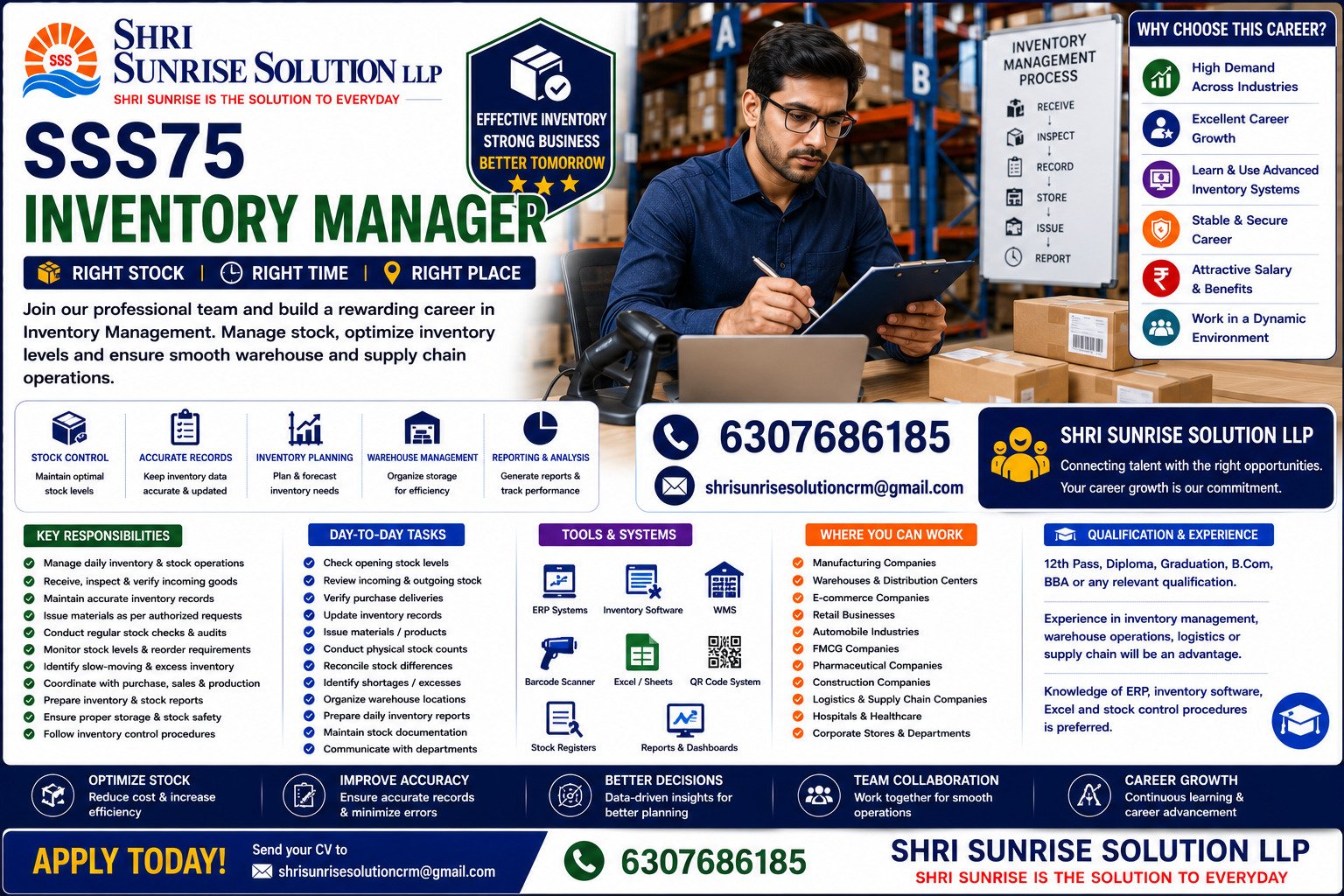
SSS75 – Inventory Manager Inventory Manager Jobs in India | Duties, Skills, Requirements & Career Opportunities
An Inventory Manager is a professional responsible for managing an organisation's stock, materials, products, and inventory records. The role involves monitoring stock levels, receiving and issuing goods, maintaining accurate records, preventing shortages or excess inventory, and ensuring efficient storage and movement of materials.
SHRI SUNRISE SOLUTION LLP provides manpower and recruitment solutions and helps connect suitable candidates with relevant inventory management, warehouse, store management, logistics, supply-chain, and operations employment opportunities according to employer requirements.
Key Responsibilities
Managing daily inventory and stock operations.
Monitoring stock levels and identifying shortages or excess stock.
Receiving incoming materials and verifying quantities.
Checking goods for damage or discrepancies.
Maintaining accurate inventory records.
Issuing materials and products according to authorised requirements.
Organising stock in appropriate storage locations.
Maintaining proper labelling and stock identification.
Conducting regular physical stock checks.
Coordinating stock audits and inventory reconciliation.
Tracking stock movement and transactions.
Preparing inventory and stock reports.
Coordinating with purchasing, sales, production, and logistics teams.
Monitoring slow-moving, damaged, or obsolete stock.
Following inventory-control and workplace-safety procedures.
Day-to-Day Inventory Management Tasks
Checking opening stock levels.
Reviewing incoming and outgoing stock.
Verifying purchase deliveries.
Updating inventory records.
Issuing materials against approved requests.
Conducting physical stock counts.
Comparing physical stock with system records.
Identifying shortages, excesses, or discrepancies.
Organising warehouse and storage areas.
Preparing daily or periodic inventory reports.
Coordinating with suppliers and internal departments.
Monitoring reorder levels.
Maintaining stock documentation.
Skills Required
Inventory and stock-management knowledge.
Good understanding of warehouse operations.
Basic supply-chain knowledge.
Stock counting and reconciliation skills.
Data-entry and record-keeping ability.
Basic computer and inventory-software knowledge.
Good organisational skills.
Attention to detail.
Analytical and problem-solving ability.
Communication and teamwork skills.
Time-management skills.
Ability to work in a warehouse or operational environment.
Tools & Systems
Depending on the employer, Inventory Managers may work with:
Inventory Management Software
ERP Systems
Warehouse Management Systems (WMS)
Barcode Scanners
QR Code Systems
Excel and Spreadsheet Applications
Stock Registers
Purchase and Dispatch Records
Reporting and Dashboard Systems
Qualification & Experience
Requirements may vary according to the employer and industry. Candidates may have 12th pass, diploma, graduation, B.Com, BBA, or another relevant qualification.
Experience in inventory management, warehouse operations, store management, logistics, procurement, or supply-chain operations can be an advantage. Knowledge of ERP, inventory software, Excel, and stock-control procedures can also be beneficial.
Where Inventory Managers Can Work
Manufacturing companies
Warehouses
E-commerce companies
Retail businesses
Automobile industries
FMCG companies
Pharmaceutical companies
Hospitals
Construction companies
Logistics companies
Distribution centres
Corporate stores and supply departments
Career Growth
With experience and additional skills, an Inventory Manager can progress into:
Senior Inventory Manager
Warehouse Manager
Store Manager
Logistics Manager
Supply Chain Executive
Supply Chain Manager
Operations Manager
Warehouse Operations Manager
Supply Chain Head
Why Inventory Managers Are Important
Effective inventory management helps organisations maintain the right stock at the right time. Inventory Managers help reduce stock shortages, excess inventory, losses, errors, and operational delays while supporting smooth warehouse and supply-chain operations.
Join SHRI SUNRISE SOLUTION LLP
Candidates interested in Inventory Manager SSS75 employment opportunities should keep their updated resume, educational documents, identification documents, experience certificates, and relevant inventory, warehouse, logistics, or ERP experience details ready.
Job Category: Inventory Manager
Category Code: SSS75
Contact
Mobile: 6307686185
Email: shrisunrisesolutioncrm@gmail.com
SHRI SUNRISE SOLUTION LLP – Shri Sunrise is the solution to everyday.

SSS76 – Logistics Coordinator Logistics Coordinator Jobs in India | Duties, Skills, Requirements & Career Opportunities
A Logistics Coordinator is responsible for coordinating the movement, storage, dispatch, and delivery of goods and materials. The role involves working with suppliers, warehouses, transporters, drivers, customers, and internal teams to ensure shipments are handled efficiently and delivered according to schedule.
SHRI SUNRISE SOLUTION LLP provides manpower and recruitment solutions and helps connect suitable candidates with relevant logistics, transportation, warehouse, supply-chain, dispatch, and operations employment opportunities according to employer requirements.
Key Responsibilities
Coordinating daily transportation and logistics activities.
Planning and tracking shipments and deliveries.
Coordinating with transporters, drivers, suppliers, and customers.
Preparing dispatch and delivery schedules.
Monitoring shipment status and delivery timelines.
Maintaining accurate logistics and shipment records.
Preparing invoices, delivery documents, and transport paperwork where required.
Coordinating with warehouse teams for loading and unloading.
Tracking delayed, damaged, or missing shipments.
Updating customers and internal teams about shipment status.
Supporting route and transportation planning.
Monitoring logistics costs and operational requirements.
Resolving routine delivery and transportation issues.
Preparing daily and periodic logistics reports.
Following company safety, documentation, and logistics procedures.
Day-to-Day Logistics Coordination Tasks
Checking the day's shipment and delivery schedule.
Confirming vehicle and driver availability.
Coordinating loading and dispatch activities.
Tracking vehicles and shipments.
Updating delivery status in records or software.
Communicating with warehouses and transport partners.
Following up on delayed deliveries.
Checking delivery documents and proof of delivery.
Coordinating returns or damaged shipments when required.
Preparing daily logistics reports.
Maintaining shipment and transporter records.
Escalating major delays or operational issues to supervisors.
Skills Required
Knowledge of logistics and transportation operations.
Good coordination and communication skills.
Shipment tracking ability.
Basic warehouse and supply-chain knowledge.
Documentation and record-keeping skills.
Basic computer and Excel knowledge.
Knowledge of logistics or ERP software can be an advantage.
Problem-solving ability.
Good time-management skills.
Attention to detail.
Ability to handle multiple tasks.
Teamwork and coordination skills.
Tools & Systems
Depending on the employer, Logistics Coordinators may work with:
Logistics Management Software
ERP Systems
Warehouse Management Systems
Transport Management Systems
GPS/Vehicle Tracking Systems
Barcode and QR Code Systems
Microsoft Excel
Email and communication platforms
Inventory and shipment databases
Qualification & Experience
Requirements may vary according to the employer and industry. Candidates may have 12th pass, diploma, graduation, BBA, B.Com, or another relevant qualification.
Experience in logistics, transportation, warehouse operations, dispatch, inventory, or supply-chain management can be an advantage. Knowledge of Excel, ERP systems, shipment tracking, and logistics documentation is also beneficial.
Where Logistics Coordinators Can Work
Logistics companies
Transport companies
E-commerce companies
Warehouses
Manufacturing companies
FMCG companies
Retail businesses
Automobile industries
Pharmaceutical companies
Distribution centres
Courier and delivery companies
Supply-chain organisations
Career Growth
With experience and additional logistics knowledge, a Logistics Coordinator can progress into:
Senior Logistics Coordinator
Logistics Executive
Transport Coordinator
Dispatch Manager
Warehouse Manager
Logistics Manager
Supply Chain Executive
Supply Chain Manager
Operations Manager
Supply Chain Operations Head
Why Logistics Coordinators Are Important
Logistics Coordinators help ensure that goods and materials move efficiently from suppliers and warehouses to their intended destinations. Effective coordination can reduce delays, improve delivery performance, maintain accurate records, and support smooth supply-chain operations.
Join SHRI SUNRISE SOLUTION LLP
Candidates interested in Logistics Coordinator SSS76 employment opportunities should keep their updated resume, educational documents, identification documents, experience certificates, and relevant logistics, warehouse, transportation, or supply-chain experience details ready.
Job Category: Logistics Coordinator
Category Code: SSS76
Contact
Mobile: 6307686185
Email: shrisunrisesolutioncrm@gmail.com
SHRI SUNRISE SOLUTION LLP – Shri Sunrise is the solution to everyday.

SSS77 – Dispatch Executive Dispatch Executive Jobs in India | Duties, Skills, Requirements & Career Opportunities
A Dispatch Executive is responsible for coordinating and managing the timely dispatch of products, materials, documents, or orders from a warehouse, store, or business location to customers, distributors, branches, or other destinations. The role involves preparing dispatch documents, coordinating with warehouse and transport teams, tracking shipments, and maintaining accurate records.
SHRI SUNRISE SOLUTION LLP provides manpower and recruitment solutions and helps connect suitable candidates with relevant dispatch, warehouse, logistics, transportation, inventory, supply-chain, and operations employment opportunities according to employer requirements.
Key Responsibilities
Managing daily dispatch operations.
Preparing dispatch schedules according to orders and delivery requirements.
Coordinating with warehouse and store teams.
Verifying products, quantities, and order details before dispatch.
Preparing invoices, delivery challans, packing lists, and other documents where required.
Coordinating with transporters, drivers, and courier partners.
Arranging loading and dispatch of goods.
Tracking dispatched shipments and delivery status.
Updating dispatch information in ERP or inventory systems.
Maintaining accurate dispatch and delivery records.
Following up on delayed or incomplete deliveries.
Handling routine dispatch-related queries.
Coordinating returns, replacements, or undelivered shipments where required.
Preparing daily and periodic dispatch reports.
Ensuring company procedures and safety requirements are followed.
Day-to-Day Dispatch Tasks
Checking the day's pending orders.
Preparing the dispatch plan.
Verifying stock availability with the warehouse team.
Checking product quantity and packaging.
Preparing dispatch documentation.
Coordinating vehicle or courier availability.
Supervising loading and dispatch activities.
Updating shipment details in the system.
Tracking vehicles and shipments.
Following up on delayed deliveries.
Collecting and maintaining proof-of-delivery records.
Preparing daily dispatch reports.
Coordinating with sales, warehouse, logistics, and customer-service teams.
Skills Required
Knowledge of dispatch and warehouse operations.
Basic logistics and transportation knowledge.
Good documentation and record-keeping skills.
Basic computer and MS Excel knowledge.
ERP or inventory-software knowledge can be an advantage.
Good communication and coordination skills.
Attention to detail.
Order and shipment tracking ability.
Problem-solving skills.
Time-management skills.
Ability to handle multiple dispatches.
Teamwork and organisational skills.
Tools & Systems
Depending on the employer, Dispatch Executives may work with:
ERP Systems
Inventory Management Software
Warehouse Management Systems (WMS)
Transport Management Systems (TMS)
Barcode and QR Code Systems
Microsoft Excel
GPS and shipment-tracking systems
Billing and invoicing software
Email and communication platforms
Qualification & Experience
Requirements may vary according to the employer and industry. Candidates may have 10th/12th pass, diploma, graduation, B.Com, BBA, or another relevant qualification.
Experience in dispatch, warehouse, logistics, inventory, transportation, billing, or supply-chain operations can be an advantage. Knowledge of Excel, ERP software, stock records, and dispatch documentation is also beneficial.
Where Dispatch Executives Can Work
Manufacturing companies
Warehouses
E-commerce companies
Logistics companies
Retail businesses
FMCG companies
Automobile industries
Pharmaceutical companies
Distribution centres
Courier and delivery companies
Construction-material companies
Corporate supply-chain departments
Career Growth
With experience and additional skills, a Dispatch Executive can progress into:
Senior Dispatch Executive
Dispatch Supervisor
Warehouse Executive
Warehouse Supervisor
Logistics Coordinator
Logistics Executive
Warehouse Manager
Logistics Manager
Supply Chain Executive
Operations Manager
Why Dispatch Executives Are Important
Dispatch Executives help ensure that the correct products reach the correct destination on time. Their coordination of orders, documentation, warehouse activities, transporters, and shipment tracking supports efficient logistics operations and customer satisfaction.
Join SHRI SUNRISE SOLUTION LLP
Candidates interested in Dispatch Executive SSS77 employment opportunities should keep their updated resume, educational documents, identification documents, experience certificates, and relevant warehouse, dispatch, logistics, inventory, or ERP experience details ready.
Job Category: Dispatch Executive
Category Code: SSS77
Contact
Mobile: 6307686185
Email: shrisunrisesolutioncrm@gmail.com
SHRI SUNRISE SOLUTION LLP – Shri Sunrise is the solution to everyday.

SSS78 – Purchase Executive Purchase Executive Jobs in India | Duties, Skills, Requirements & Career Opportunities
A Purchase Executive is responsible for supporting an organisation's purchasing and procurement activities. The role involves identifying purchasing requirements, communicating with suppliers, comparing quotations, preparing purchase orders, monitoring deliveries, and maintaining accurate procurement records.
SHRI SUNRISE SOLUTION LLP provides manpower and recruitment solutions and helps connect suitable candidates with relevant purchase, procurement, vendor management, supply-chain, inventory, and business operations employment opportunities according to employer requirements.
Key Responsibilities
Handling day-to-day purchase and procurement activities.
Understanding material and product requirements from departments.
Identifying and communicating with suitable suppliers.
Requesting and comparing supplier quotations.
Negotiating prices, delivery schedules, and terms where authorised.
Preparing purchase orders and procurement documents.
Following up with suppliers for timely delivery.
Verifying received materials against purchase orders.
Coordinating with stores, inventory, accounts, and production teams.
Maintaining supplier and purchase records.
Monitoring pending purchase orders.
Supporting vendor evaluation and selection.
Resolving routine purchase and delivery discrepancies.
Preparing purchase and procurement reports.
Following company procurement policies and approval procedures.
Day-to-Day Purchase Tasks
Checking pending purchase requirements.
Reviewing material requests from departments.
Contacting suppliers for quotations.
Comparing prices, quality, and delivery terms.
Preparing purchase orders after required approvals.
Following up on pending orders.
Checking expected delivery dates.
Coordinating with stores for material receipt.
Updating purchase records and supplier information.
Communicating with accounts regarding invoices and payment documentation.
Maintaining procurement files and reports.
Escalating delays or major supplier issues to supervisors.
Skills Required
Knowledge of purchasing and procurement processes.
Vendor and supplier coordination skills.
Good negotiation and communication skills.
Basic knowledge of inventory and supply-chain operations.
Purchase-order and documentation skills.
Good knowledge of MS Excel.
ERP or procurement-software knowledge can be an advantage.
Analytical and comparison skills.
Attention to detail.
Problem-solving ability.
Time-management skills.
Ability to coordinate with multiple departments.
Tools & Systems
Depending on the employer, Purchase Executives may work with:
ERP Systems
Procurement Management Software
Inventory Management Systems
Microsoft Excel
Purchase Order Systems
Vendor Management Platforms
Accounting and Billing Software
Email and communication platforms
Qualification & Experience
Requirements may vary according to the employer and industry. Candidates may have 12th pass, diploma, graduation, B.Com, BBA, or another relevant qualification.
Experience in purchasing, procurement, vendor management, inventory, stores, logistics, or supply-chain operations can be an advantage. Knowledge of Excel, ERP systems, purchase documentation, and supplier coordination is also beneficial.
Where Purchase Executives Can Work
Manufacturing companies
Construction companies
Automobile industries
Retail businesses
E-commerce companies
FMCG companies
Pharmaceutical companies
Hospitals
Hotels and hospitality businesses
Logistics companies
Engineering companies
Corporate procurement departments
Career Growth
With experience and additional procurement skills, a Purchase Executive can progress into:
Senior Purchase Executive
Procurement Executive
Purchase Supervisor
Procurement Specialist
Vendor Manager
Purchase Manager
Procurement Manager
Supply Chain Manager
Procurement Head
Supply Chain Operations Manager
Why Purchase Executives Are Important
Purchase Executives help organisations obtain the required materials, products, and services at appropriate prices and within required timelines. Effective purchasing supports smooth business operations, inventory availability, cost control, and supplier relationships.
Join SHRI SUNRISE SOLUTION LLP
Candidates interested in Purchase Executive SSS78 employment opportunities should keep their updated resume, educational documents, identification documents, experience certificates, and relevant purchase, procurement, inventory, ERP, or vendor-management experience details ready.
Job Category: Purchase Executive
Category Code: SSS78
Contact
Mobile: 6307686185
Email: shrisunrisesolutioncrm@gmail.com
SHRI SUNRISE SOLUTION LLP – Shri Sunrise is the solution to everyday.
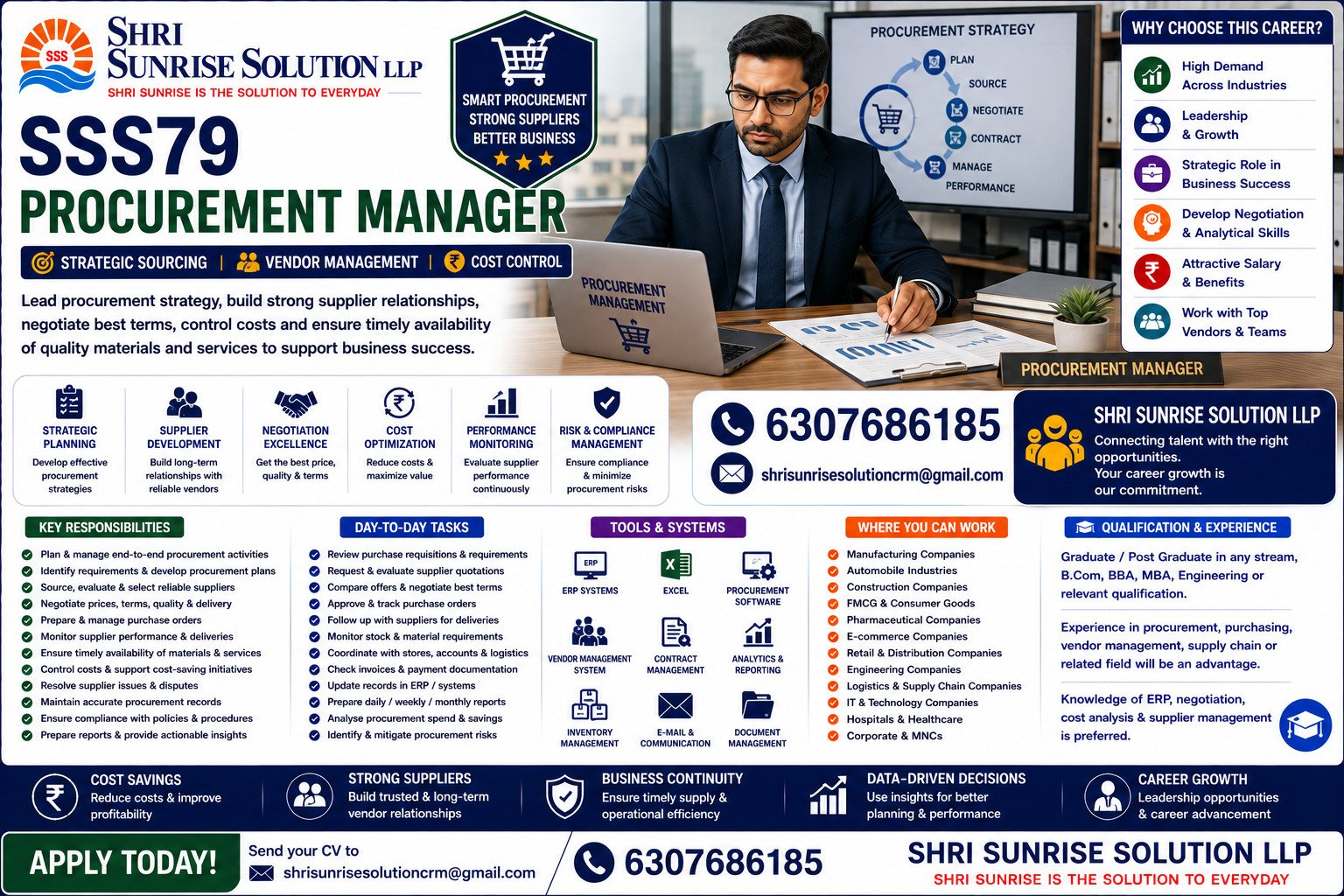
SSS79 – Procurement Manager Procurement Manager Jobs in India | Duties, Skills, Requirements & Career Opportunities
A Procurement Manager is a professional responsible for planning, managing, and controlling an organisation's procurement activities. The role involves sourcing suppliers, negotiating commercial terms, managing vendor relationships, controlling procurement costs, ensuring timely availability of materials and services, and maintaining effective purchasing processes.
SHRI SUNRISE SOLUTION LLP provides manpower and recruitment solutions and helps connect suitable candidates with relevant procurement, purchasing, vendor management, supply-chain, inventory, and business operations employment opportunities according to employer requirements.
Key Responsibilities
Planning and managing procurement activities.
Identifying organisational purchasing requirements.
Developing and maintaining supplier relationships.
Identifying, evaluating, and selecting suitable vendors.
Requesting and comparing supplier quotations.
Negotiating prices, payment terms, quality, and delivery schedules.
Reviewing and approving purchase requirements according to company procedures.
Managing purchase orders and procurement documentation.
Monitoring supplier performance and delivery timelines.
Ensuring required materials and services are available on time.
Controlling procurement costs and supporting cost-saving initiatives.
Coordinating with finance, stores, production, logistics, and operations teams.
Managing supplier contracts and commercial documentation where required.
Resolving supplier-related quality, delivery, and commercial issues.
Maintaining procurement records and reports.
Developing procurement strategies and improving purchasing processes.
Ensuring procurement activities follow company policies and applicable requirements.
Day-to-Day Procurement Management Tasks
Reviewing pending purchase requirements.
Checking stock and material requirements with relevant departments.
Communicating with suppliers and requesting quotations.
Comparing supplier prices, quality, terms, and delivery schedules.
Negotiating with vendors where authorised.
Reviewing purchase orders and pending procurement activities.
Following up with suppliers for timely delivery.
Monitoring supplier performance.
Coordinating with warehouse and stores teams for received materials.
Checking purchase invoices and supporting documentation.
Resolving routine procurement discrepancies.
Updating procurement records and ERP systems.
Preparing daily, weekly, or monthly procurement reports.
Reviewing procurement costs and identifying potential savings.
Skills Required
Strong knowledge of procurement and purchasing processes.
Vendor and supplier management skills.
Negotiation and commercial skills.
Supply-chain knowledge.
Cost-analysis and comparison skills.
Purchase-order management.
Contract and documentation knowledge.
Strong MS Excel and reporting skills.
ERP/procurement software knowledge.
Analytical and problem-solving ability.
Excellent communication and coordination skills.
Leadership and team-management skills.
Strong decision-making ability.
Attention to detail.
Tools & Systems
Depending on the employer, Procurement Managers may work with:
ERP Systems
Procurement Management Software
Vendor Management Systems
Inventory Management Systems
Microsoft Excel
Purchase Order Systems
Contract Management Platforms
Business Intelligence and Reporting Tools
Accounting and Finance Systems
Qualification & Experience
Requirements vary according to the employer and industry. Candidates may have graduation, B.Com, BBA, MBA, engineering, supply-chain management, or another relevant qualification.
Experience in procurement, purchasing, vendor management, supply chain, inventory, or commercial operations is generally valuable. Knowledge of ERP systems, negotiation, contract management, cost analysis, and supplier evaluation can be an advantage.
Where Procurement Managers Can Work
Manufacturing companies
Automobile industries
Construction companies
Engineering companies
E-commerce businesses
Retail organisations
FMCG companies
Pharmaceutical companies
Hospitals
Logistics and supply-chain companies
IT and technology companies
Corporate procurement departments
Career Growth
With experience and strong procurement expertise, a Procurement Manager can progress into:
Senior Procurement Manager
Procurement Head
Strategic Sourcing Manager
Supply Chain Manager
Category Manager
Commercial Manager
Procurement Director
Supply Chain Director
Head of Supply Chain
Chief Procurement Officer
Why Procurement Managers Are Important
Procurement Managers help organisations obtain the right products, materials, and services at appropriate quality, cost, and delivery conditions. Effective procurement supports cost control, supplier performance, operational continuity, inventory availability, and overall business efficiency.
Join SHRI SUNRISE SOLUTION LLP
Candidates interested in Procurement Manager SSS79 employment opportunities should keep their updated resume, educational documents, identification documents, experience certificates, and relevant procurement, purchasing, vendor-management, ERP, or supply-chain experience details ready.
Job Category: Procurement Manager
Category Code: SSS79
Contact
Mobile: 6307686185
Email: shrisunrisesolutioncrm@gmail.com
SHRI SUNRISE SOLUTION LLP – Shri Sunrise is the solution to everyday.